Welcome to my blog. I am Wenjing, and you can also call me Yulanda. I am a student in International Tourism Management at the University of Exeter. This blog is designed to understand the information and skills of digital business models. I hope to apply these skills to tourism management. Personally, my interest in tourism has never been reduced. I studied tourism management for four years as an undergraduate and I still have a passion for this field. I regard traveling as an interesting thing which is full of infinite possibilities and unknowns. Through several years’ learning, I possessed a fundamental understanding and comprehensive knowledge of tourism. My determination to continue my research on this field is firmer. In order to acquire more professional knowledge and practical experience, I came here. After one semester of studying, I learned more about tourism and business. At the same time I think that there are many unknown areas to learn.
As we all know, the development of digital information technology in recent years has brought huge changes and progress to business and many industries. In order to better learn business knowledge and understand the business market, I chose the course Digital Business Models. At the beginning of the course, the tutor told us that digital is not technology, it is empowering people, organizational culture and new behaviours. I believe that through this course, I can learn more about it and learn to use new skills like blog to better learn busines
If you have any questions, please email me. Email address:wy272@exeter.ac.uk
Final Reflection on BEMM129 Digital business models.
The course of digital business models is nearing the end, and my learning of knowledge has also ended the first stage. Thanks to the variety and fun of the course format, I learned a lot of new skills and knowledge. This is my first experience of MOOC and such an attractive course, which also gave me the motivation to continue learning related knowledge. Next I want to review my gains and experiences.
What did I get?
Ability to write a blog
This is my first attempt to build a blog and manage it. The writing form of a blog is different from academic papers, and more intuitive and vivid language and expressions can be used. I also learned how to typeset and design pages to better help the text to express my views. I also mastered practical skills such as designing web pages and making videos.
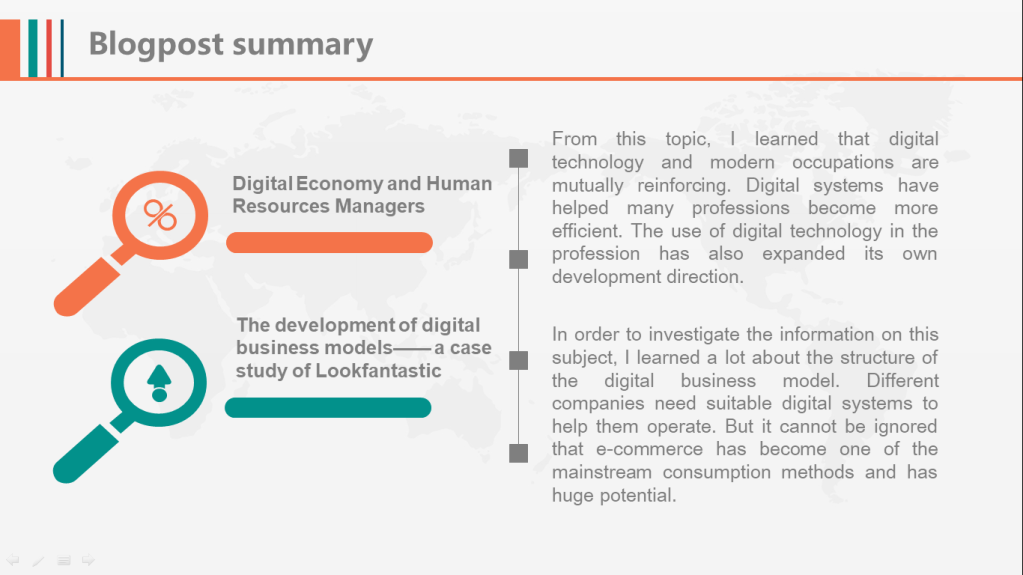
Figure 1 What I learned from the blogpost
MOOC knowledge
The MOOC contains a lot of knowledge related to digital business. Unlike academic articles, the content of MOOC has many practical cases, videos, and interviews make knowledge easier to understand and apply. Each course page allows comments, so I can learn about other students’ ideas and express my opinions in this way.
Learn through communication
In my previous studies, I always focused on academic resources and teacher feedback. However, the experience in this module made me discover that the communication with my classmates can also bring a lot of new gains. They have amazing ideas and interesting expressions to give me a deeper understanding of the subject. Through comments from others, I can know where there are errors and where can be better. Questioning can keep people awake and make progress.
How have my values and study methods been impacted?
Thanks to this module, I learned that there are many methods and resources for learning. In addition to reading the literature, we can also learn by watching videos released by experts. Our peers are also our resources for acquiring knowledge when we cannot understand everything. Everyone’s strengths and ideas are different, and communication can allow us to see a broader dimension.
Video about the future plan
The essence of social learning is to share and exchange resources with peers, so as to achieve goals more efficiently. The experience is precious and useful. I will learn more digital skills in learning and work. This course will be the new beginning of my learning experience.
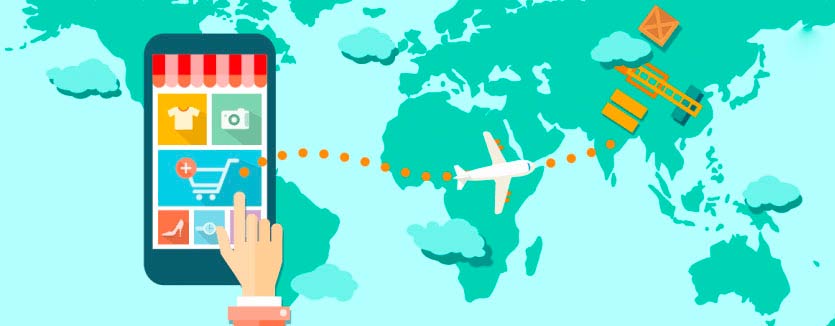
The current world economic trend is digital technology and close integration with business. In recent years, with the development of information technology and economic level and the popularity of mobile devices, cross-border e-commerce has become a popular consumption form. This is a great example to understand how business models work in a digital background. In many cross-border e-commerce, the UK website lookfantastic is an example.
Cross-border e-commerce refers to the conduct of transactions between two parties in different countries based on the Internet (Liu, 2018). They complete the payment of funds through the network and realize the delivery of goods through the cross-border logistics system.
Lookfantastic is a well-known British cosmetics shopping website with large number of users. This website is not only popular with British users, but also a good choice for consumers across the globe to purchase cosmetics. The business model of this website is a cross-border direct purchase model. In order to better learn about digital business models, this article analyzes the consumption patterns of Chinese consumers using this website.
Operating model
The cross-border direct purchase model eliminates the complicated process and provides consumers with a convenient purchasing experience.
Process: First, domestic consumers place orders directly through the website in China. Then the platform delivers the goods to customers through the cooperation of two overseas courier companies through international direct mail.
The profit model of cross-border e-commerce is to earn the difference. There is no middleman method to make consumers and merchants a win-win situation.
Logistics model
Step 1: Domestic buyers submit orders on the platform.
Step 2: Overseas merchants will transport goods in the form of postal parcels or commercial express mail.
Step 3: The express delivery company contracting logistics services is responsible for customs declaration.
Step 4: Parcels need to be cleared after they arrive in China. After customs clearance, the postal agency will collect it, which is a postal express.
Step 5: Consumer receives package.
Payment model
The payment model of lookfantastic is the purchase of foreign exchange. In the foreign exchange purchase payment model, buyers select products on cross-border e-commerce platforms, and third-party payment platforms provide consumers with RMB payment methods. After payment, the third-party payment platform exchanges capital flow and information flow with the partner bank, and informs overseas merchants, and notifies overseas merchants of timely delivery.
SWOT analysis
Strengths
1 Price advantage. The price of direct mail products is much lower than domestic counters. Websites often offer promotions to attract customers.
2 Convenient returns and refunds.
3 Low postage price. Orders over £ 40 are free of postage, and orders under £ 40 are priced at £ 7.50, which is a relatively low price.
Weaknesses
1 Customer service response is not fast enough.
2 The logistics takes a long time, ranging from one week to four weeks, and there is also the risk of goods being seized by customs.
Opportunities
The website has a complete range of products, and there are many professional and regional niche brands to meet the individual needs of different customers.
Threats
1 Platforms of the same type, such as feelunique and mankind, seize the market and compete fiercely.
2 Tax policies and changes in various countries will affect business.
Digital contribution
Digital technology has affected almost all steps in the overall operation of this website. From the perspective of consumers, they choose to purchase goods and query logistics information through the Internet. When face-to-face transactions with merchants are not possible, the web is their only contact tool. From a website perspective, they need to do a good job of managing and linking up every link. In the process, powerful digital technologies have played a key role. A powerful server can keep your website up and running. The convenient online transaction process can provide customers with high-quality services.
Unlike other industries, cross-border e-commerce is more dependent on digital technology due to time and space factors (Lai, 2019). Outstanding digital business model is essential for the development of e-commerce (Jiuru, 2018). Digital model is the main business process of e-commerce, and it is also a method of making profits. Online operation reduces human resource costs and office land costs, which can increase profitability.
Conclusion
Cross-border e-commerce is a product that conforms to the trend of the world economy and has great development prospects, but there are still many limitations in its operation. For example, the emergence of different business models has intensified competition among established e-commerce companies. In addition, deepening services and strengthening supply chain management also deserve attention. In the future, managers should main study how to strengthen the brand effect and enhance consumers’ shopping experience.
References
Liu, H., & Wang, X. (2018, March). Study on the application of big data in accurate marketing of cross-border e-commerce in China. In 2018 IEEE 3rd International Conference on Big Data Analysis (ICBDA) (pp. 24-27). IEEE.
Jiuru, Z. (2018, June). Influential factors and strategic analysis on the development of cross-border E-commerce between China and Russia under” the belt and road” initiative. In 2018 Chinese Control And Decision Conference (CCDC) (pp. 1521-1525). IEEE.
Lai, J. (2019, September). Research on Cross-Border E-Commerce Logistics Supply Under Block Chain. In 2019 International Conference on Computer Network, Electronic and Automation (ICCNEA) (pp. 214-218). IEEE.
In the first week of MOOC, I learned a lot about the digital economy. The fourth industrial revolution is mentioned in the course to show the development of science and technology, and more importantly, the impact of these developments on society. Therefore, this article will mainly discuss the development and change of occupations in the context of the digital economy. I chose the career of human resources manager as an example to analyze the changes caused by digital reasons such as new technology.
According to relevant academic articles, the process of human resource management is mainly divided into 5 stages: strategic planning, selection, preparation, performance measurement, and repatriation (Brewster, 2016). Because of Oxford University’s research on job role automation, we know that human resource managers are less automated jobs (Schwab, 2017). However, in the two stages of selection and performance measurement, it is still greatly affected by the digital economy. In the period when digital technology is not developed, human resource managers mainly rely on the interviewee’s personal resume and interview results in the selection process. The way interviewers express their abilities is relatively simple. With the development of digital technology, first of all, the interview channels have been greatly expanded. For example, some sites like GILDTM and TalentBin, collect information such as career history and social networking sites to assist companies in employee selection. For both interviewers and managers, the probability and accuracy of directional selection is improved, which greatly improves the work efficiency of human resource managers. Because of big data, managers can more quickly and comprehensively collect data to make optimal decisions.
Another significant affected stage is performance measurement. In the initial performance appraisal, managers evaluated employees based on attendance and task completion. With the rapid development of the digital economy, companies are equipped with advanced sign-in systems. The machine helps to record attendance more efficiently and reduces labor costs. The development of information systems is mature and can provide managers with powerful data collection and analysis functions. With the help of the system, managers can accurately record and evaluate employees’ work performance according to the evaluation criteria. In subsequent management, this information can also be used for analysis to provide employees with a more scientific training strategy. In addition to being useful in assessment and career planning, information technology also provides technical conditions for communication between employees.
These changes have made the work of human resource managers more efficient and have promoted other aspects of human resource management. Many technologies generated by the digital economy can improve human resource management, such as information technology and artificial intelligence. Some scholars believe that IT may help speed up and improve administrative, operational and planning decisions related to human resources (Turulja, 2016). I think such a development is in line with the current situation of the digital economy and will bring more changes and advantages to human resource management in the future.
The impact of the future digital economy may be in two aspects, a more personalized management system and automation of work procedures. On the first aspect, the existing information management system is to establish a unified assessment standard for company employees. In the future, the evolution direction of the system is mainly to develop appropriate management procedures based on the personal characteristics of employees. On the other aspect, the development of new technology makes it possible to automate more tasks. Among these technologies, the most widely used are information systems and AI (artificial intelligence). Perhaps one day AI will be able to complete the interview job. There is an interesting case about this assumption. In March 2017, the machine won the third nplace in the annual industry competition organized by the well-known North American company named SourceCon (Stroud, 2017). It is worth noting that the robot screened out suitable candidates in only 3.2 seconds. The first place took 25 hours, and the remaining participants took an average of 4-9 hours. This example allows more people to see the possibility of digital development in the human resource management industry.
As a summary, the development of the digital economy has a positive role in promoting human resource management. It can help people do the job more efficiently. In the future, digital technology will also bring more development opportunities for this industry. I believe that the digital economy can also have a positive impact in other industries.
REFERENCES
Brewster, C., Vernon, G., Sparrow, P., & Houldsworth, E. (2016). International human resource management. Kogan Page Publishers.
Schwab K. The Fourth Industrial Revolution. London: Portfolio Penguin; 2017.
Turulja, L., & Bajgorić, N. (2016). Human Resources or Information Technology: What is More Important for Companies in the Digital Era?. Business Systems Research Journal, 7(1), 35-45.








 Welcome to a new trip